

Cryotherapy Price in Pakistan: A Complete Guide to Treatment and Costs
Cryotherapy has become an increasingly popular medical treatment in Pakistan for various skin conditions and minor surgical procedures. Many people are curious about this freezing technique and how it compares to other treatment options. This comprehensive guide explores everything one needs to know about cryotherapy in Pakistan, including its costs, benefits, methods, and where to find qualified specialists for treatment.
What is Cryotherapy?
Cryotherapy is a medical procedure that uses extreme cold to freeze and eliminate abnormal or unwanted tissue. The term comes from the Greek words “cryo” meaning cold and “therapy” meaning cure. During the procedure, medical professionals apply liquid nitrogen or other freezing agents to targeted areas of the skin, causing the abnormal cells to freeze and eventually fall off.
This treatment method is commonly used for removing warts, skin tags, moles, and other benign skin lesions. The procedure is relatively quick, minimally invasive, and can often be performed in a doctor’s office without the need for hospitalization.
Benefits of Cryotherapy
Cryotherapy offers numerous advantages that make it an attractive treatment option for many patients in Pakistan:
Quick and Convenient
The procedure typically takes only a few minutes to complete, allowing patients to return to their daily activities almost immediately. There’s minimal disruption to one’s routine.
Minimal Invasiveness
Unlike surgical procedures that require incisions, cryotherapy is non-invasive. It doesn’t involve cutting or stitching, which means less trauma to the body.
Reduced Risk of Infection
Since there are no open wounds or surgical cuts, the risk of infection is significantly lower compared to traditional surgical methods.
Little to No Scarring
When performed correctly by experienced professionals, cryotherapy leaves minimal scarring. The treated area usually heals cleanly without noticeable marks.
Cost-Effective
Compared to more complex surgical procedures, cryotherapy is generally more affordable, making it accessible to a wider range of patients.
No Anesthesia Required
Most cryotherapy procedures can be performed without general anesthesia, eliminating the risks associated with anesthesia and reducing overall treatment costs.
Cost of Cryotherapy in Pakistan
The cost of cryotherapy in Pakistan varies depending on several factors, including the location of the clinic, the expertise of the specialist, and the size and number of lesions being treated.
Average Price Range
In Pakistan, cryotherapy typically costs between PKR 2,000 to PKR 15,000 per session. The variation in pricing depends on:
- Type of lesion: Simple warts may cost less, while more complex treatments require higher fees
- Number of treatments: Some conditions require multiple sessions
- City and clinic: Metropolitan areas like Islamabad, Karachi, and Lahore may have higher prices
- Doctor’s experience: More experienced dermatologists and specialists may charge premium rates
- Clinic facilities: High-end clinics with advanced equipment may have higher fees
Cost Comparison by City
- Islamabad: PKR 3,000 – PKR 12,000 per session
- Karachi: PKR 2,500 – PKR 15,000 per session
- Lahore: PKR 2,000 – PKR 12,000 per session
- Other cities: PKR 2,000 – PKR 10,000 per session
Patients should note that multiple sessions may be required for complete treatment, so the total cost should be discussed with the specialist beforehand.
How Can I Find Treatment of Cryotherapy and Electrocautery?
Finding qualified specialists for cryotherapy and electrocautery treatment in Pakistan is straightforward with the right approach:
Dermatology Clinics
Most dermatologists offer cryotherapy services. Major hospitals and specialized skin clinics in cities across Pakistan have dermatology departments equipped for these procedures.
Online Medical Platforms
Several Pakistani healthcare platforms allow patients to search for specialists, read reviews, compare prices, and book appointments online. These platforms provide detailed information about doctors’ qualifications and experience.
Hospital Referrals
Patients can visit general hospitals and ask for referrals to dermatologists or specialists who perform cryotherapy and electrocautery procedures.
Word of Mouth
Asking friends, family, or colleagues for recommendations can help find trusted specialists who have delivered good results.
Medical Directories
Professional medical directories list certified dermatologists and their contact information, making it easier to locate specialists in specific areas.
How Does Cryotherapy Work in Islamabad?
Islamabad, being the capital city, has numerous medical facilities offering cryotherapy services with modern equipment and qualified professionals.
Procedure Steps
- Consultation: The specialist examines the lesion and determines if cryotherapy is appropriate
- Preparation: The treatment area is cleaned and prepared
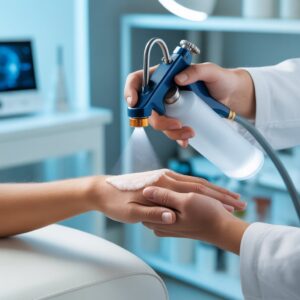
- Application: Liquid nitrogen is applied using a spray device or cotton swab
- Freezing: The tissue freezes for several seconds, turning white
- Thawing: The area is allowed to thaw naturally
- Repeat if necessary: Some cases require a freeze-thaw-freeze cycle
Treatment Duration
A typical session in Islamabad takes 5 to 20 minutes, depending on the number and size of lesions being treated.
Follow-up Care
Specialists in Islamabad provide detailed aftercare instructions and schedule follow-up appointments to monitor healing and determine if additional sessions are needed.
Availability
Cryotherapy is widely available across Islamabad in major hospitals, private clinics, and dermatology centers. Most facilities accept walk-in consultations, though appointments are recommended to avoid waiting times.
Side Effects of Cryotherapy
While cryotherapy is generally safe, patients should be aware of potential side effects:
Common Side Effects
- Pain and discomfort: A stinging or burning sensation during and immediately after treatment
- Redness and swelling: The treated area may become red and swollen for a few hours
- Blistering: Blisters may form within hours of treatment, which is a normal part of healing
- Temporary skin discoloration: The treated area may appear lighter or darker than surrounding skin
Less Common Side Effects
- Infection: Though rare, infection can occur if the area isn’t kept clean
- Nerve damage: Prolonged freezing can damage nearby nerves, causing numbness
- Scarring: While minimal, scarring can occur, especially with aggressive treatment
- Permanent pigment changes: Some patients experience lasting changes in skin color
Managing Side Effects
Most side effects resolve on their own within a few days to weeks. Patients should follow their doctor’s aftercare instructions, keep the area clean, and avoid picking at blisters or scabs.
Which is Better – Cryotherapy or Electrocautery?
Both cryotherapy and electrocautery are effective treatments, but each has distinct advantages depending on the condition being treated.
Cryotherapy Advantages
- No bleeding during the procedure
- Minimal to no scarring
- No need for local anesthesia in most cases
- Quick recovery time
- Lower risk of infection
Electrocautery Advantages
- More precise control over treatment depth
- Immediate tissue destruction
- Better for certain types of lesions
- Single treatment often sufficient
- Can control bleeding during the procedure
When to Choose Cryotherapy
Cryotherapy is typically preferred for:
- Superficial warts
- Skin tags
- Small benign lesions
- Patients with bleeding disorders
- Those seeking minimal scarring
When to Choose Electrocautery
Electrocautery may be better for:
- Larger or deeper lesions
- Cases requiring tissue sampling
- When precise control is needed
- Areas where cryotherapy has failed
The choice between the two methods ultimately depends on the patient’s specific condition, the doctor’s recommendation, and individual preferences regarding recovery time and potential side effects.
What is Cryotherapy & Electrocautery For Removal Of Warts?
Warts are common skin growths caused by the human papillomavirus (HPV), and both cryotherapy and electrocautery are effective removal methods.
Cryotherapy for Warts
Cryotherapy works by freezing the wart tissue, causing the cells to die and the wart to eventually fall off. The freezing process disrupts the blood supply to the wart and triggers the immune system to fight the virus.
Treatment Process:
- Liquid nitrogen is applied to the wart for 10-30 seconds
- The wart turns white and may blister
- Over the next week or two, the dead tissue falls off
- Multiple sessions may be needed for stubborn warts
Electrocautery for Warts
Electrocautery uses electrical current to burn away the wart tissue. Heat destroys the wart and seals blood vessels simultaneously.
Treatment Process:
- Local anesthesia is administered
- An electrocautery device burns the wart tissue
- The area is cleaned and bandaged
- Usually requires only one session
Success Rates
Both methods have success rates of 60-85% for wart removal. Some warts may require multiple treatments or a combination of both methods for complete removal.
Recovery Comparison
Cryotherapy typically requires less downtime but may need multiple visits. Electrocautery often achieves results in one session but may involve slightly longer healing time due to the burn wound.
Uses of Cryotherapy in Pakistan
In Pakistan, cryotherapy is utilized for various medical and cosmetic purposes:
Dermatological Uses
- Wart removal: Common warts, plantar warts, and genital warts
- Skin tag removal: Quick removal of benign skin growths
- Actinic keratosis: Treating precancerous skin lesions
- Mole removal: Removing benign moles for cosmetic reasons
- Age spots: Reducing the appearance of sun-damaged skin
Medical Applications
- Keloid treatment: Reducing raised scar tissue
- Small skin cancers: Treating basal cell carcinomas in early stages
- Lentigos: Removing pigmented spots
- Seborrheic keratosis: Treating benign skin growths common in older adults
Cosmetic Procedures
- Facial rejuvenation: Some clinics offer cryotherapy facials
- Hyperpigmentation: Treating dark spots and uneven skin tone
- Minor cosmetic corrections: Addressing various aesthetic concerns
Growing Applications
As awareness increases in Pakistan, more medical professionals are incorporating cryotherapy into their treatment options, making it increasingly accessible across the country.
Cryotherapy Methods in Pakistan
Medical facilities in Pakistan employ various cryotherapy techniques depending on the condition being treated:
Liquid Nitrogen Spray
This is the most common method where liquid nitrogen is sprayed directly onto the lesion using a handheld device. The spray can be controlled for precise application.
Advantages:
- Quick application
- Good for multiple small lesions
- Precise targeting
Cotton Swab Application
A cotton-tipped applicator is dipped in liquid nitrogen and applied directly to the lesion. This method offers maximum control.
Advantages:
- Excellent precision
- Minimal risk of treating surrounding healthy tissue
- Ideal for sensitive areas
Cryoprobe Method
A metal probe cooled by liquid nitrogen is pressed against the lesion. This method is less common but available in some advanced facilities.
Advantages:
- Consistent temperature control
- Good for deeper lesions
- Predictable treatment depth
Freeze-Thaw Cycles
Some treatments involve multiple freeze-thaw cycles where the tissue is frozen, allowed to thaw, and frozen again for enhanced effectiveness.
Advantages:
- Higher success rates for stubborn lesions
- Better tissue destruction
- Particularly effective for warts
Most clinics in Pakistan’s major cities have access to modern cryotherapy equipment, ensuring patients receive quality treatment comparable to international standards.
Risks and Side Effects
Understanding the potential risks helps patients make informed decisions about cryotherapy:
Immediate Risks
- Excessive pain: Some patients experience more pain than anticipated
- Fainting: Rarely, patients may feel faint during or after treatment
- Allergic reactions: Though uncommon, reactions to materials used
Short-term Complications
- Wound infection: If proper hygiene isn’t maintained
- Excessive blistering: Large blisters may require medical attention
- Bleeding: Minor bleeding can occur when blisters break
Long-term Concerns
- Hypopigmentation: Permanent lightening of the treated area
- Hyperpigmentation: Permanent darkening of the treated area
- Textural changes: The skin may feel or look different
- Recurrence: The original condition may return
Contraindications
Cryotherapy may not be suitable for:
- Pregnant women (for certain applications)
- People with cold sensitivity disorders
- Those with poor circulation
- Individuals with certain autoimmune conditions
Patients should discuss their complete medical history with their specialist before undergoing treatment.
When to Contact a Specialist for Cryotherapy in Pakistan?
Knowing when to seek professional help ensures timely and appropriate treatment:
Conditions That May Require Cryotherapy
- Persistent warts that don’t respond to over-the-counter treatments
- Suspicious skin growths or moles
- Multiple skin tags causing discomfort or cosmetic concerns
- Actinic keratosis or other precancerous lesions
- Keloids or hypertrophic scars
- Age spots or sun damage
Warning Signs to See a Doctor Immediately
- Skin lesions that bleed without injury
- Growths that change in size, color, or shape
- Lesions that don’t heal within a few weeks
- Painful or itchy skin abnormalities
- Any suspicious changes in existing moles
Consultation Process
During the initial consultation, the specialist will:
- Examine the condition thoroughly
- Discuss treatment options
- Explain the procedure and expected outcomes
- Provide cost estimates
- Answer any questions or concerns
Choosing the Right Time
Patients should schedule consultations when:
- The condition affects quality of life
- Over-the-counter treatments have failed
- There are cosmetic concerns
- A skin lesion appears suspicious
- Multiple lesions require professional removal
Don’t hesitate to seek professional advice for any skin concern. Early intervention often leads to better outcomes and simpler treatments.
Frequently Asked Questions
How can I book an appointment with a specialist of Cryotherapy and Electrocautery?
Patients can book appointments through online medical platforms, by calling clinics directly, or by visiting hospitals in person. Many dermatology clinics accept walk-ins, though scheduled appointments reduce waiting time.
What is the fee range of top specialists of Cryotherapy and Electrocautery in Islamabad?
Top specialists in Islamabad typically charge between PKR 2,000 to PKR 5,000 for consultation fees, with procedure costs ranging from PKR 3,000 to PKR 12,000 depending on the complexity and number of lesions treated.
Who are the Best doctors for Cryotherapy and Electrocautery in Islamabad?
The best doctors are those with extensive experience in dermatology, positive patient reviews, and affiliations with reputable medical institutions. Patients should look for specialists with at least 5-10 years of experience in performing these procedures and check their credentials through medical boards.